1
AI automation services
Help a small business organize leads, inboxes, support questions, reports, or repeated admin work.
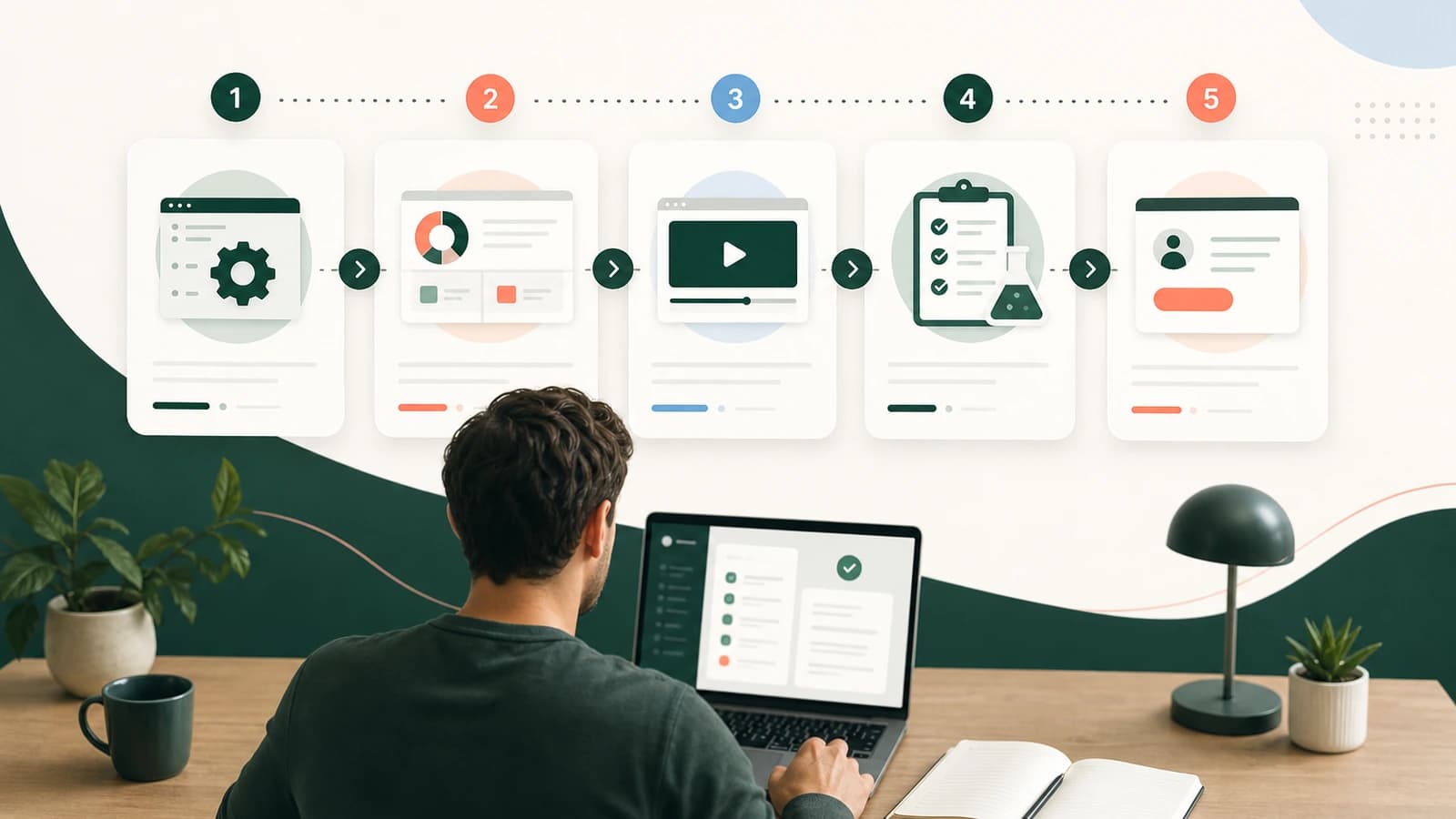
Start with one AI service for small businesses. Build it, price it, and learn how to find clients using Codex, Claude Code, or your preferred AI agent.
Start with two complete lessons. Full access is a one-time payment with no subscription.
Your first service
Follow one cleaning-company example: turn a message into a summary, missing questions and a reply draft for the owner to approve. Adapt the niche when useful.
Free: choose the service and make a tested prompt demo.
Full access: continue the same project through 24 steps: build, check, set a price, prepare outreach and learn how to hand it over.
Live integrations need their own setup, approval and testing. Tools may cost extra; the example is not a proven client result.
Help a small business organize leads, inboxes, support questions, reports, or repeated admin work.
Build a focused web app, dashboard, or private client workspace with help from your AI agent.
Create research, planning, repurposing, and production workflows that save creators time.
Find one slow business process, improve it, and package the result as a clear starter service.
A simple path
Keep the same service from your first demo to your proposal and handoff. You do not need to complete every optional track before trying your offer.
Pick one buyer, one repeated problem, and one service you can explain in a sentence.
Use our prompts to ask your chosen agent to plan, build, check, and improve the result.
Package the service, choose a starter price, begin outreach, and complete a clear handoff.

What full access includes
Start with 24 steps for your first service. The full library contains 61 steps, including extra practice and optional tracks.
Inside the academy
These are real academy screens captured with a demonstration account. Any names, progress, or examples shown are fictional training data.
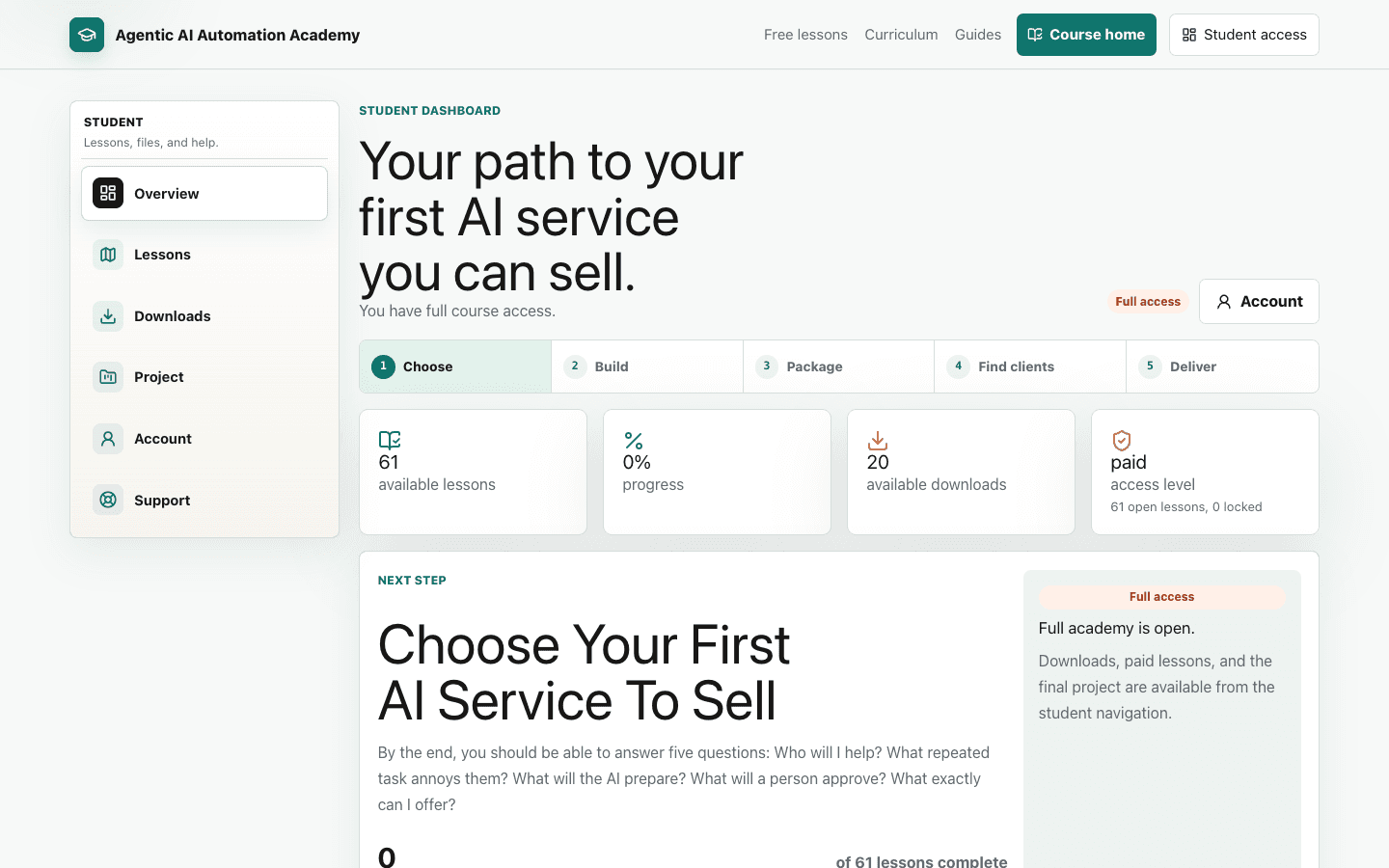
Your course path
See progress, access, resources, and the next lesson without searching through a long content library.
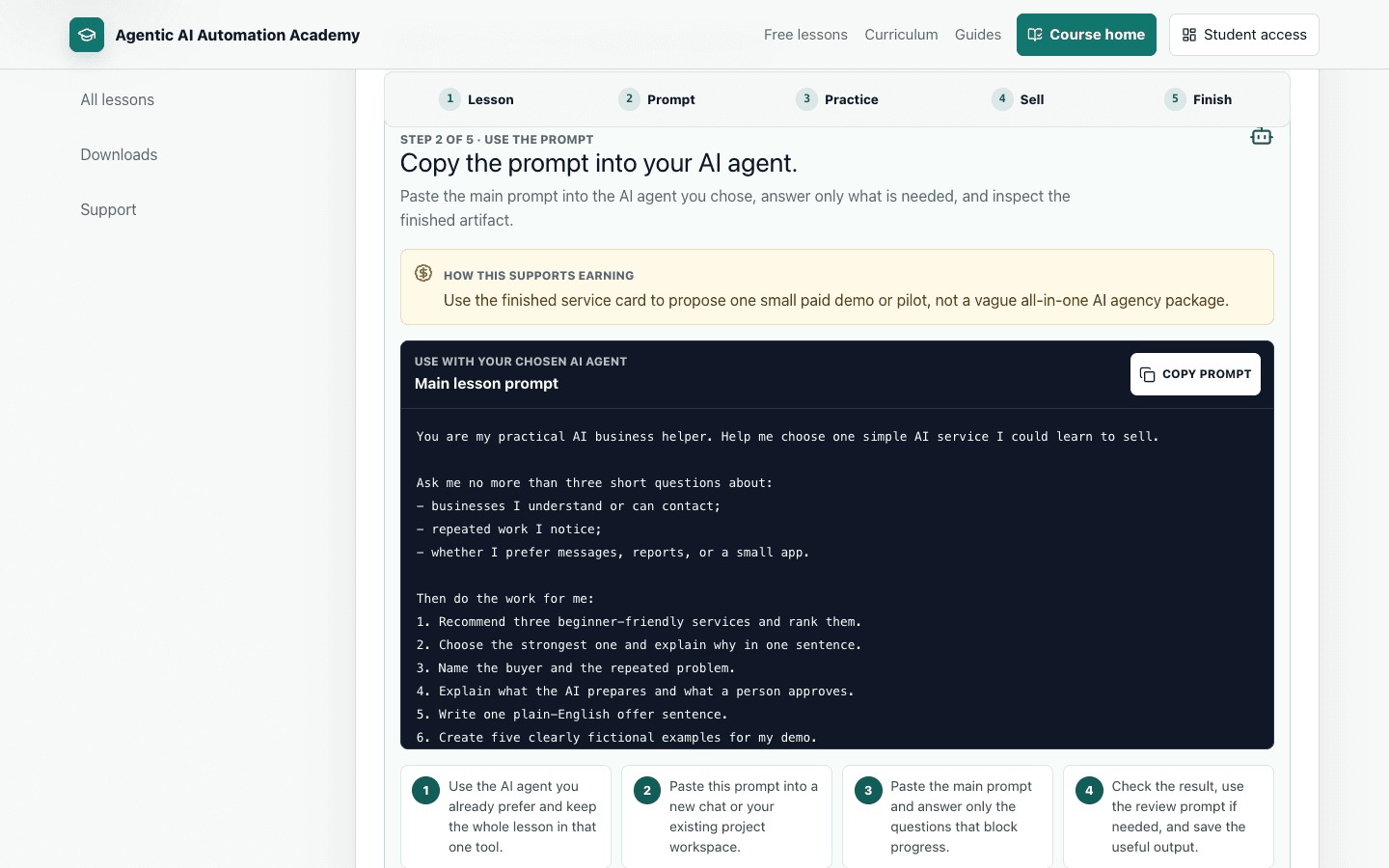
Inside a lesson
Lessons combine plain-English direction with copyable prompts, examples, boundaries, and a clear completion point.
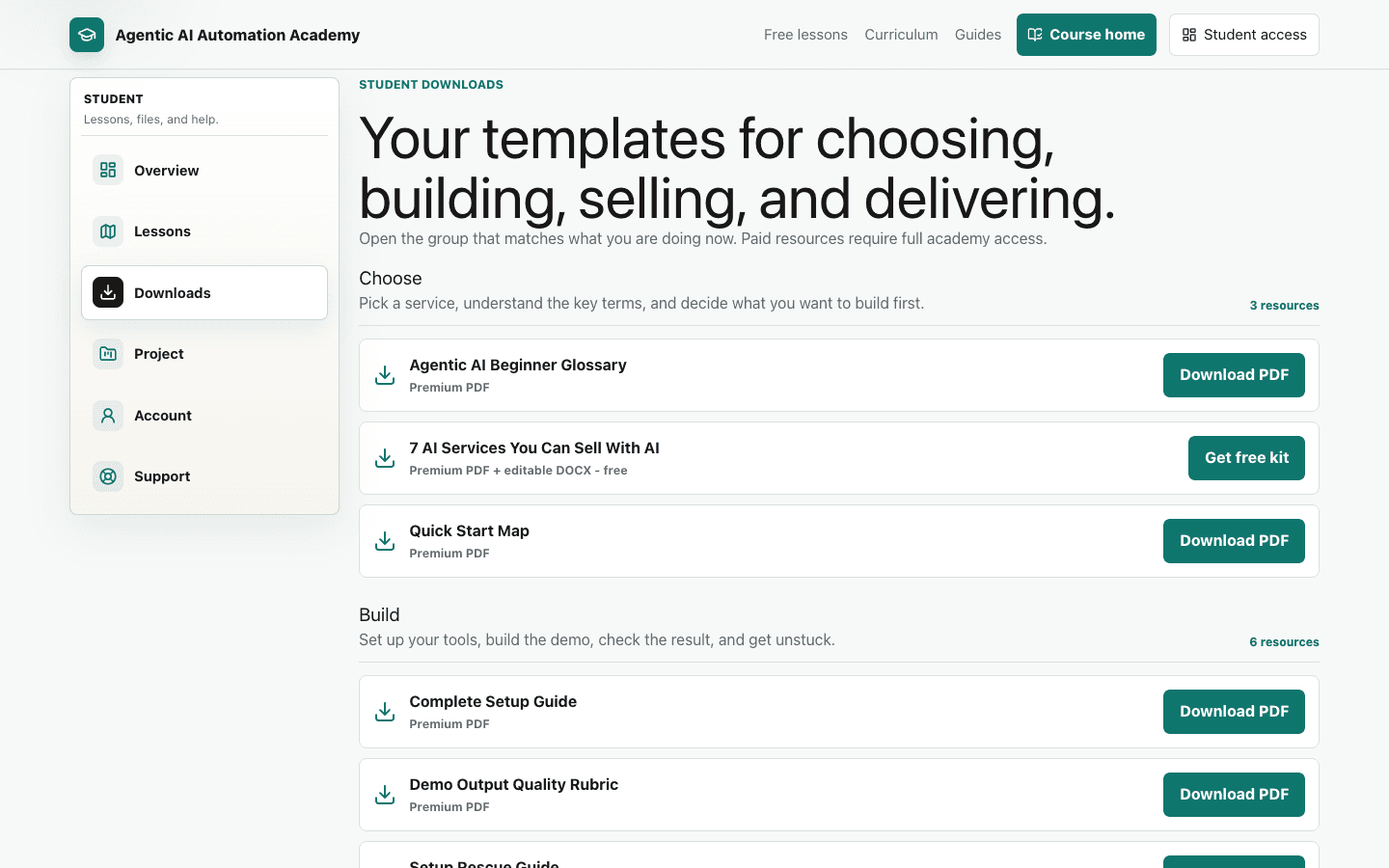
Resource library
Download worksheets, playbooks, setup guides, and project templates from one organized library.
Start without paying
Both lessons open immediately. Download the free 7 AI Services Kit instantly; email signup is optional.
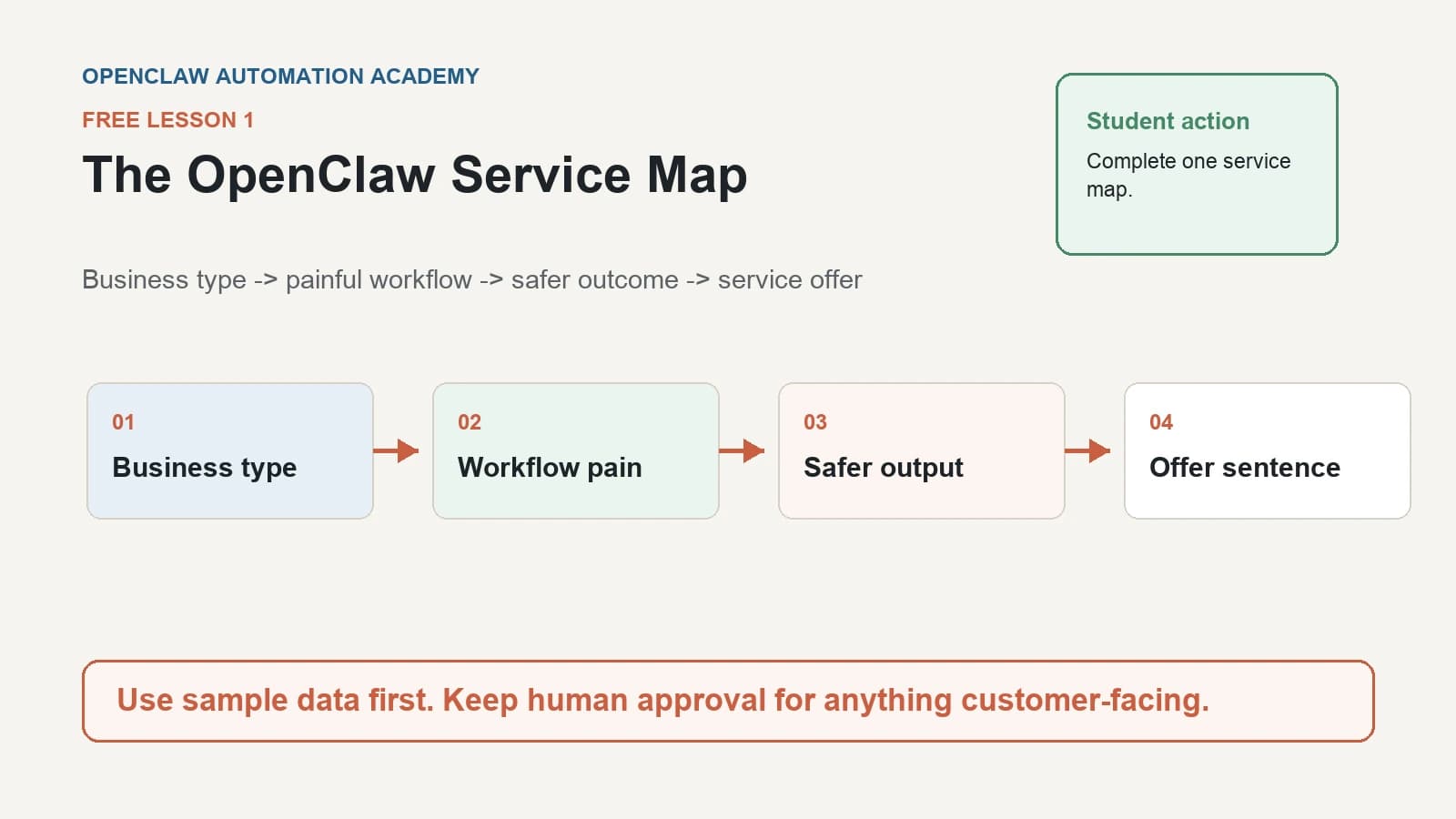
Find one buyer, one repeated problem, and one useful service idea.
Open lesson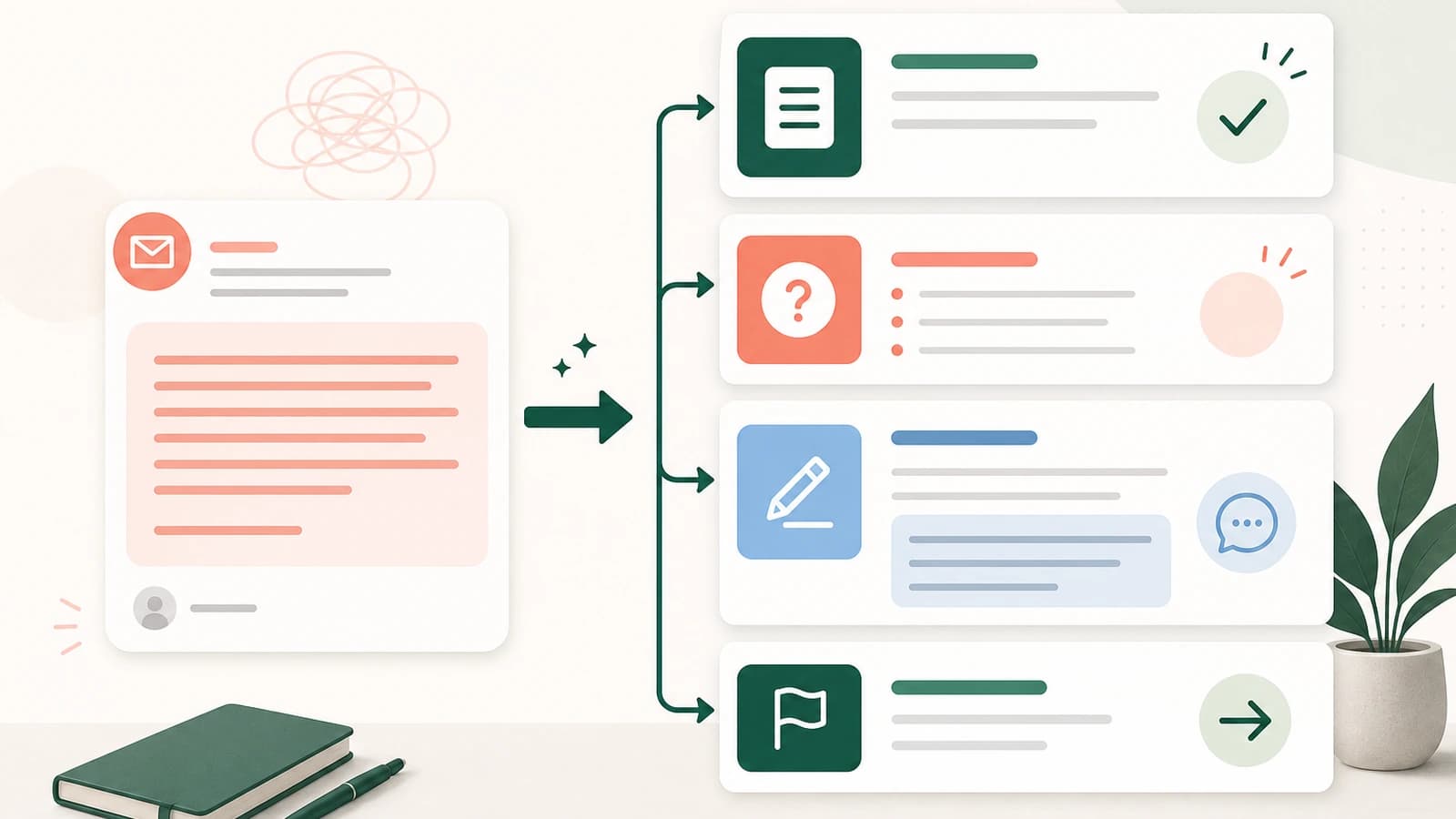
Use your AI agent to turn a fictional example into something you can show.
Open lessonSee the buyer, problem, offer, starter prompt, and next action for seven beginner-friendly services.
Get the free kitReady when you are
No. You learn how to brief one AI agent, use copyable prompts, inspect the result, and ask the agent to explain technical steps in plain English.
No. Choose Codex, Claude Code, or another compatible project agent and stay with the tool you prefer.
No. It teaches practical skills, offers, outreach, pricing, and delivery. Results still depend on your work, market, offer, and follow-through.
Open both complete free lessons and request the free 7 AI Services Kit. No payment card is needed.
Educational training only. Income and client results depend on your skills, effort, market, offer, and follow-through.